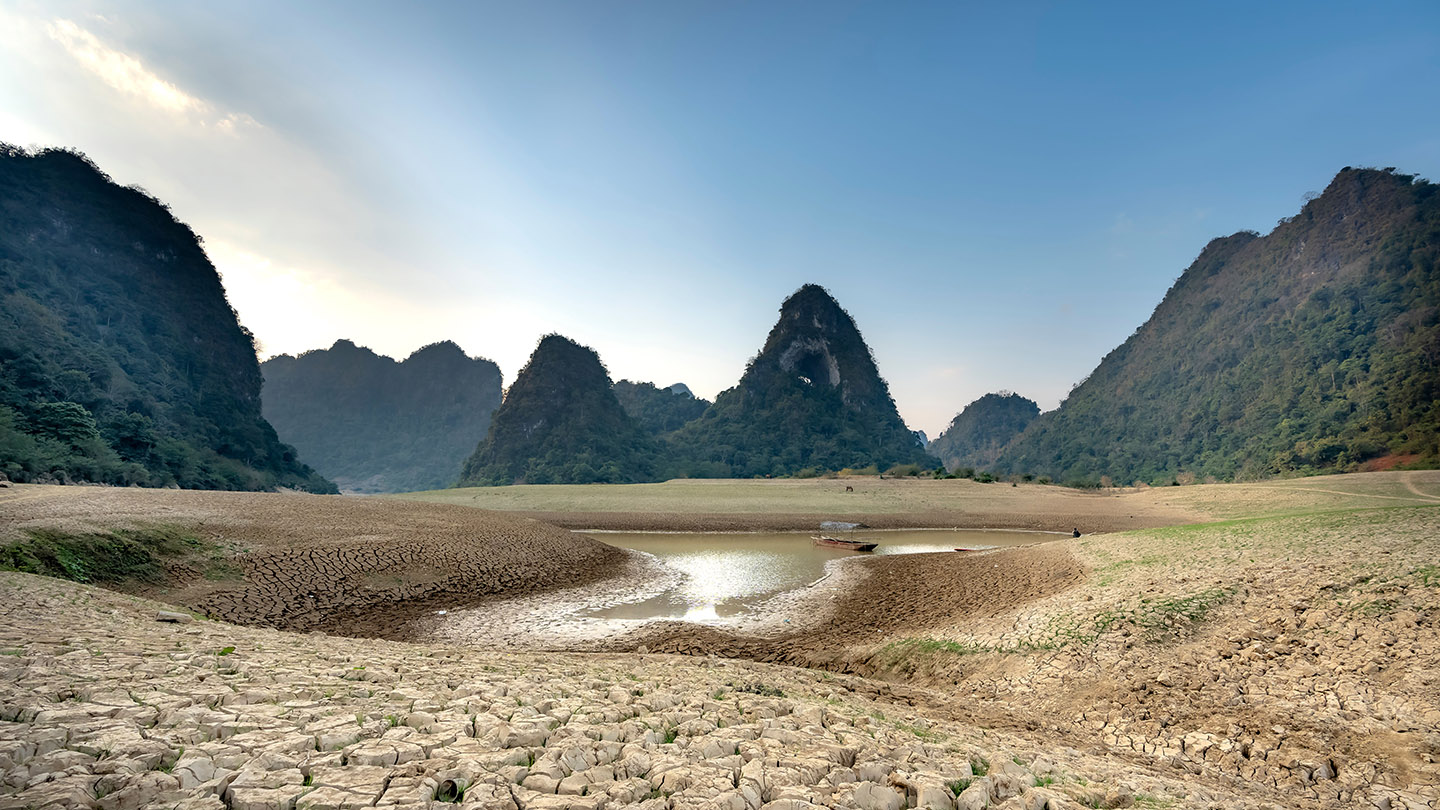
Desertification is a less visible crisis, yet it is deeply interconnected with other environmental challenges. COP17—the conference dedicated to combating desertification—concludes today in Mongolia; although the issue may seem remote, it actually affects us very directly.
Italy, too, is increasingly experiencing the combined effects of climate change, water stress, and land degradation. In recent years, the country has alternated between periods of exceptional drought and extreme weather events, impacting water availability, agriculture, and ecosystems.
According to ISPRA data, the maximum percentage of national territory experiencing "severe or moderate drought" in 2025 reached 31.6% on a three-month timescale and 12.2% on a twelve-month timescale. This indicates that a significant portion of the country is exposed to land degradation and the risk of desertification, with central and southern regions being particularly vulnerable. Northern Italy has also faced severe water stress in recent years, as evidenced by critical conditions affecting major river basins. These phenomena demonstrate that desertification is not a distant issue confined to the planet's most arid regions, but a challenge that also affects European and Mediterranean territories.
Desertification: What is the role of business?
For the business world, land degradation and growing water scarcity represent not only an environmental challenge but also an issue of competitiveness and resilience. Economic activities depend—to varying degrees—on the services ecosystems provide: from water availability and soil fertility to climate stability and the capacity of natural environments to support agricultural production, supply chains, and infrastructure.
Intensifying drought and land degradation can disrupt the production of supply chains, affect the availability and cost of raw materials, heighten competition for water resources, and expose businesses to increasingly significant physical and operational risks. These dynamics affect numerous economic sectors—albeit with varying intensity—and are particularly significant for a country like Italy, given its strong reliance on agri-food, manufacturing, and industrial supply chains.
Consequently, there is growing interest in approaches that enable businesses to understand not only their impacts on natural capital but also their dependencies on ecosystems and the services they provide. This perspective highlights the need to integrate the management of climate, water, and nature-related risks into corporate strategies and to strengthen organizational adaptability and resilience in the long term.

An integrated governance to tackle interconnected challenges
More than thirty years after the Rio Earth Summit, the three conventions dedicated to climate, biodiversity, and desertification continue to remind us that none of these challenges can be effectively addressed in isolation. Protecting the soil means contributing to climate change mitigation and adaptation, preserving biodiversity, strengthening water and food security, and enhancing the resilience of territories. It also means creating the conditions for economic activities to continue thriving amidst growing climate and environmental pressures, thereby reducing risk exposure and bolstering the adaptive capacity of production of value chains.
In a world where climate, nature, and resources are increasingly interdependent, the fight against desertification is therefore an essential component of a new environmental governance—one capable of strengthening the resilience of ecosystems, economies, and communities. It is a challenge that engages institutions, businesses, the scientific community, and civil society, requiring a virtuous balance between an increasingly integrated approach, a long-term perspective, and concrete action.