
The topic of sustainable management of supply chains is, today, more central than ever: the report Global Value Chains Outlook 2026 of the World Economic Forum, presented in Davos in January 2026, highlights how global value chains have entered an era of structural instability, forcing the private sector to reevaluate the methods and destinations of its investments and production.
Nearly three in four business leaders now prioritize investments in resilience within their supply and value chains, with 74% considering it a growth driver rather than a risk management tool. The great dilemma for companies will be how to remain competitive in a context characterized by geopolitical fragmentation, accelerating technological change, and growing resource constraints.
Competitive advantage for the private sector will therefore come from the ability to coordinate a complex ecosystem of suppliers, customers, and regulators; build modular networks that combine efficiency and adaptability; and integrate flexibility and intelligence to seize growth opportunities in an increasingly fragmented global economy.

Visibility along the entire value chain: an enabling condition for sustainability
The private sector is called upon to play a leadership role in sustainability and to foster a culture based on the principles of equity, inclusion, transparency, and environmental protection, including among its suppliers. To this end, it is essential for companies to develop and adopt formal procedures and tools, such as a supplier code of conduct. This establishes clear expectations and rules of engagement between buyers and suppliers, enabling business relationships based on shared values and regulatory standards.
Without a view of the entire value chain, it is impossible to be effective in terms of sustainability: each company is the leader in its own supply chain's improvement journey.
The Importance of Due Diligence in the Supply Chain
Due diligence is a structured and ongoing risk management system aimed at identifying and managing negative impacts—current or potential—that one's value chain may have on the environment, human rights, and governance, while ensuring transparency and accountability.
Some important aspects to emphasize when discussing due diligence:
- it is an ongoing process: "conducting" due diligence by its very nature requires consistency and attention over time;
- it doesn't just involve a company's internal processes: one of the enabling conditions for due diligence is visibility and transparency throughout the entire supply chain (sometimes "opaque" supply chains are limited to Tier 1);
- a "generalized" approach is not possible: it's impossible to imagine that supply chain visibility is the same for companies in completely different sectors;
- the goal is not just analysis, but prevention and mitigation.

The Added Value of ESG Audits for Companies
As part of carefully monitoring their supply chains, ESG audits are a valuable tool for companies to obtain formal verification of the policies, practices, and performance with which a company and its suppliers manage material risks related to climate impact, workers' rights, ethical conduct, and transparency.
An ESG audit should be viewed as a process, consisting of a series of steps:
- Carefully and concertedly designing a checklist of questions the auditor asks the supplier, inspired by the ILO Conventions on the protection of human and workers' rights and occupational safety;
- Mapping the suppliers for on-site audits: it is important to conduct a selection and risk assessment upfront to identify the lesser-known and, therefore, higher-risk suppliers that require more in-depth monitoring;
- Choosing the appropriate type of audit: pre-announced audits can be conducted, as can unannounced audits for suppliers with a high level of risk;
- Activation of corrective actions: After the audit, a document review (desktop review) or an on-site follow-up can be requested to verify that improvement actions have actually been implemented.

A working group of Italian companies on the topics
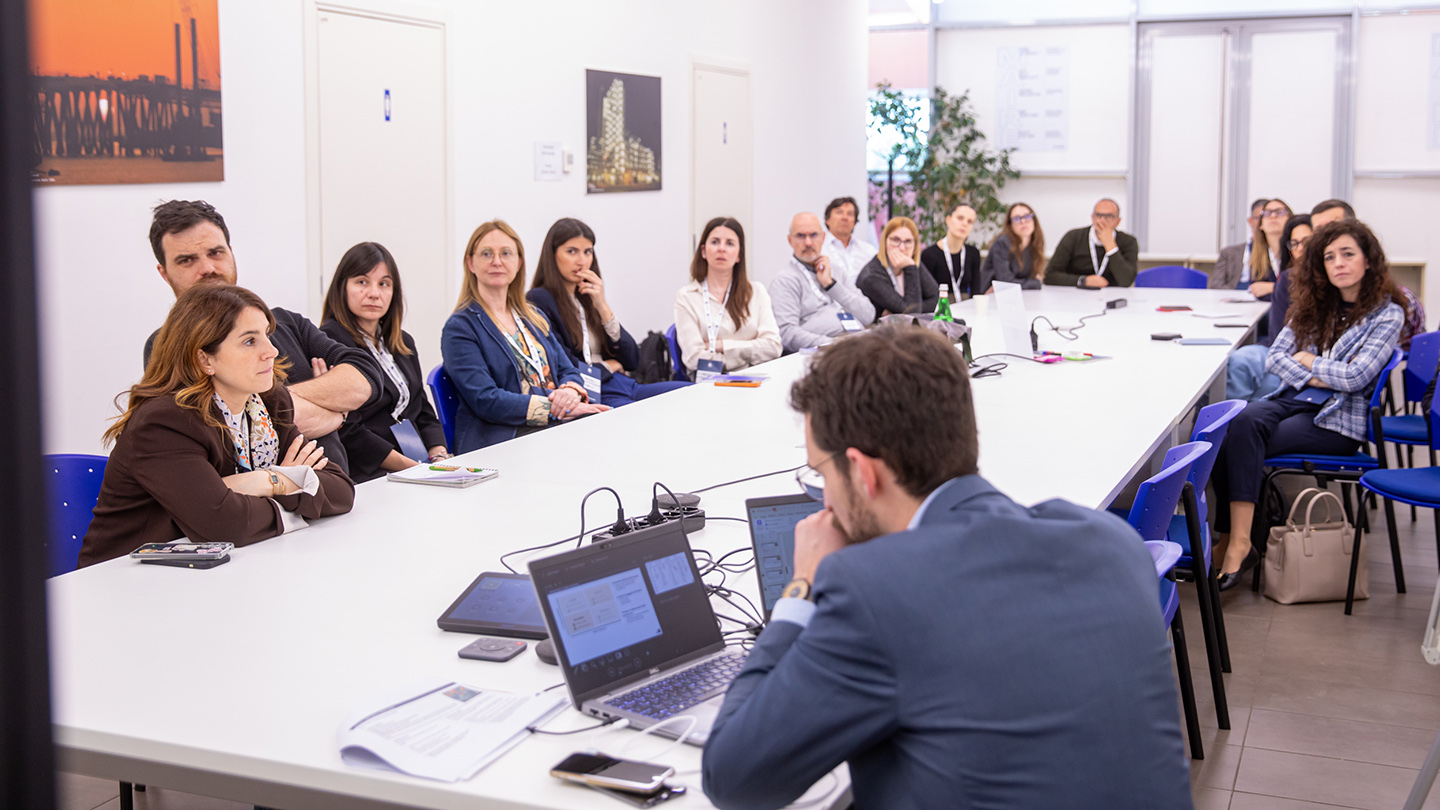
Based on these premises, the Italian Network of the UN Global Compact has been carrying out the Working Group on Sustainable Procurement since 2023. Its aim is to offer Italian companies adhering to the UN Global Compact a space for in-depth analysis, exchange of experiences, and peer learning on sustainable supply chain management.
For the 2026 edition, the working group involves 68 business organizations—95% of which are companies and 5% SMEs. The program will take place between April and November 2026 and will consist of four sessions, which will explore the following topics:
- ESG due diligence and audits;
- supplier management and evaluation systems;
- emissions reduction and circularity in the supply chain;
- digitalization and artificial intelligence for sustainable procurement.
BROWSE THE EVENT PHOTO GALLERY ▶


Read also: Sustainability as a strategic lever for economic growth