
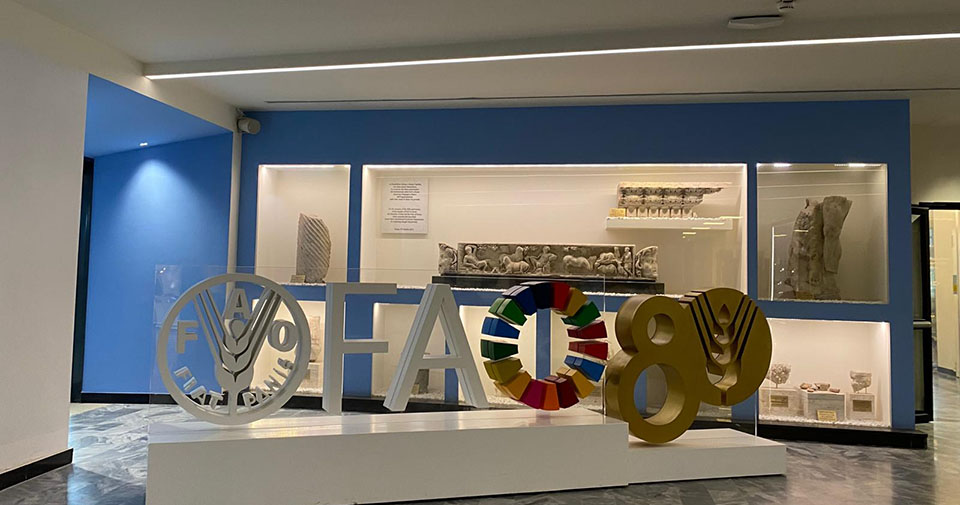
Yesterday morning, the Executive Director of UNGCN Italy, Daniela Bernacchi, participated in the first global Workshop on Voluntary National Reviews - organized by the United Nations Department of Economic and Social Affairs (UNDESA) and hosted by the Food and Agriculture Organization of the United Nations (FAO).
The main objective of the meeting was to bring together representatives of Governments, institutions and civil society organizations from around the world, involved in the implementation of Voluntary National Reviews (VNRs), to facilitate the exchange of knowledge, experiences and best practices, and explore specific issues and challenges related to the preparation of VNRs, in view of the upcoming High-Level Political Forum in New York.
Voluntary National Review: how states report progress towards the 2030 Agenda
The Voluntary National Reviews (VNRs) are reports drawn up by States on a voluntary basis to report, periodically and as comprehensively as possible, the progress made in achieving the Sustainable Development Goals of the 2030 Agenda at a national level.
The VNRs are presented at the High-Level Political Forum, which is held every year in July in New York, to offer member states, international organizations and civil society the opportunity to exchange information and promote dialogue on the implementation of the SDGs.
Italy presented its VNRs in 2017, 2022 and will present the next one in 2026, focusing on the following SDGs: 6 on water; 7 on clean energy; 9 on innovation and industry; 11 on sustainable cities and 17 on partnerships.
The contribution of UN Global Compact Network Italy to the debate
One of the key principles of VNRs is that they must be inclusive and act as open platforms, to promote strategic partnerships useful for the implementation of the SDGs. For this reason, the various countries are invited to consult and involve non-governmental organizations and civil society actors to draw up their own review.
In this scenario, the Executive Director of UNGCNI, Daniela Bernacchi, brought her contribution, providing ideas and guidelines on how to mobilize the private sector effectively in the VNR process; speaking in the morning session dedicated to stakeholder engagement, also sharing the actions implemented in this area by the Network, such as the current participation in the National Forum for Sustainable Development, coordinated by MASE.
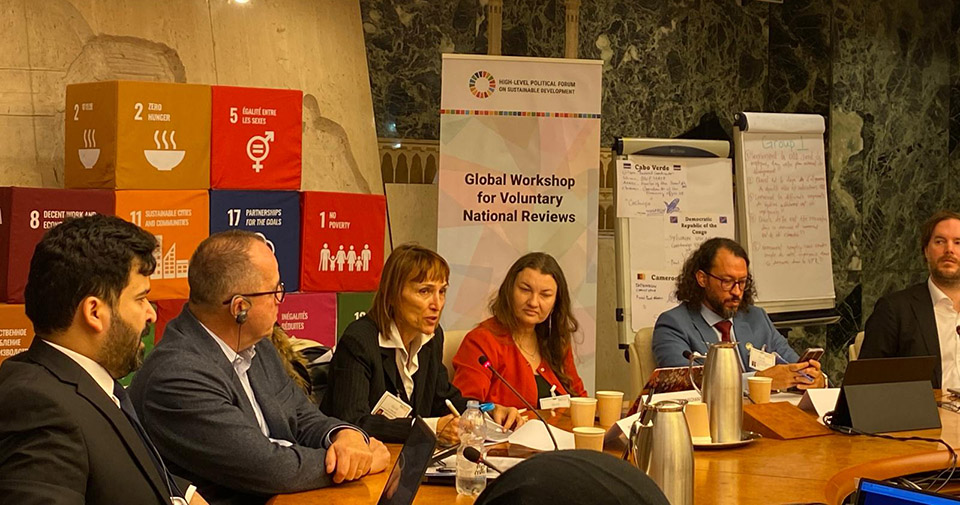
"The UN Global Compact, at a global level, is a bridge between Governments and the private sector, to bring the voice of businesses into the most relevant institutional fora, providing data and best practices of the concrete actions that companies are undertaking on sustainable development. The contribution of the private sector is truly fundamental, because it is necessary to mobilize huge resources in a short time to cover the financial gap towards the SDGs by 2030, which is currently estimated at around 4 trillion dollars a year. Businesses have the economic resources, but also the know-how to generate positive impact” Bernacchi said.