
The circular economy should no longer be viewed as an emerging trend, but rather as a fundamental strategic lever for Italian SMEs seeking to remain competitive, strengthen their role within supply chains, and achieve sustainable growth in both national and international markets. In a context marked by volatile raw material prices, increasing resource scarcity, and an increasingly complex regulatory environment, the adoption of circular models enables companies to reduce risk exposure while creating new value opportunities.
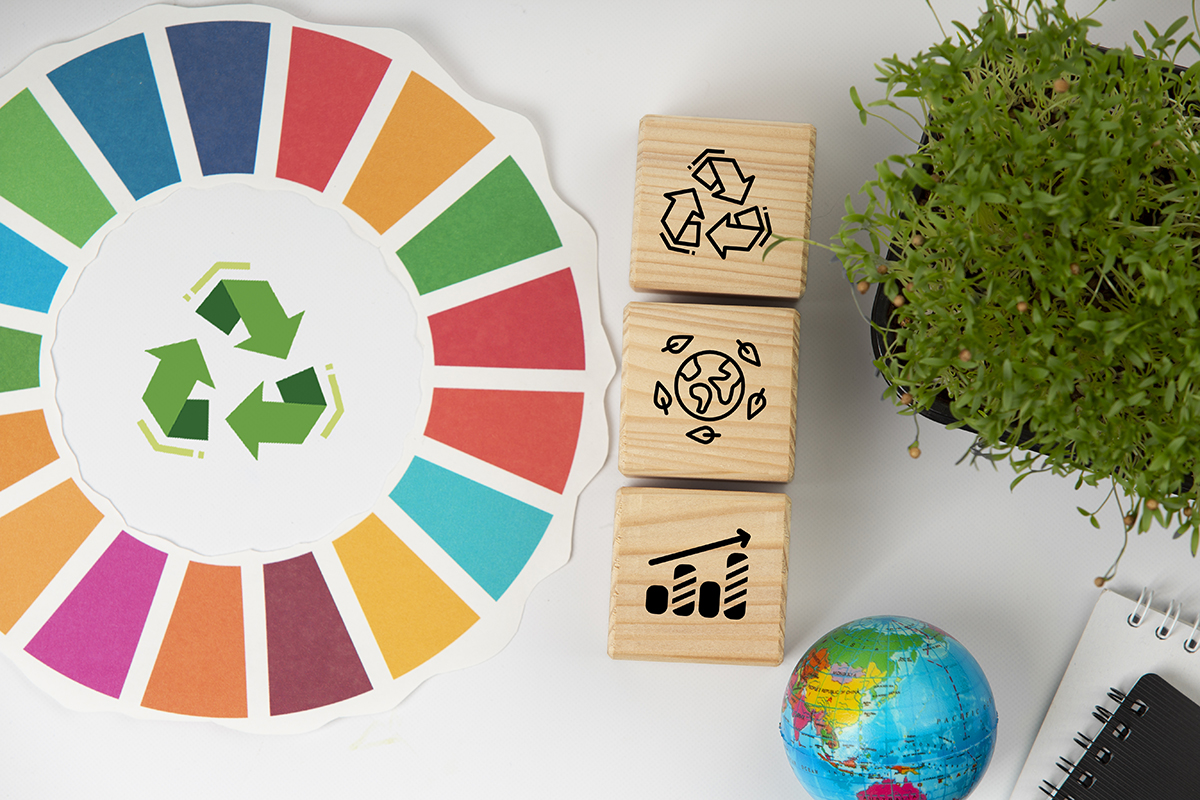
The circular economy is a model of production and consumption that aims to keep products, materials, and resources in use for as long as possible through practices such as sharing, reuse, repair, refurbishment, and recycling. Its objective is to extend product life cycles and significantly reduce waste generation by reintegrating materials into production processes once their original function has been fulfilled. This approach transforms waste into resources, creating additional economic value and improving the overall efficiency of production systems.
An increasing number of companies recognize that reuse, repair, recycling, and the extension of product lifespans are not only environmentally responsible choices, but also powerful drivers of competitiveness. The integration of digital technologies—such as artificial intelligence, cloud solutions, and ERP and CRM systems—supports supply chain optimization and improved process management, enabling a circular approach that is measurable, replicable, and scalable. This, in turn, promotes data-driven decision-making and more efficient resource utilization.
According to the Circular Economy Network Report 2025, Italy remains among the leading countries in Europe for circular economy performance, ranking second only to the Netherlands among the 27 EU Member States, and ahead of Germany, France, and Spain. However, the report emphasizes the need to accelerate progress, as greater circularity—through improved resource efficiency and increased use of secondary raw materials—can help revitalize Made in Italy and enhance business competitiveness. An analysis by Cassa Depositi e Prestiti shows that in 2024 the adoption of circular practices generated savings of €16.4 billion for manufacturing companies. Moreover, the European Commission estimates that improving economic circularity could reduce energy system costs by around 7% over the period 2031–2050, corresponding to annual savings of approximately €45 billion.
The European regulatory framework, increasingly focused on integrating industrial, environmental, and financial policies, plays a decisive role in this transition. The Clean Industrial Deal aims to strengthen the competitiveness of European industry by promoting decarbonization, resource efficiency, and the resilience of value chains. This initiative will be complemented by the forthcoming Circular Economy Act, which will introduce more structured requirements related to product design, the use of secondary raw materials, extended producer responsibility, and the measurement of circular performance. Another key regulatory instrument is the Green Claims Directive, in force since March 2026, which imposes stringent criteria for validating environmental claims. These include the use of verifiable scientific data, standardized methodologies such as Life Cycle Assessment (LCA), and independent verification systems. In this context, sustainability goes beyond reputational considerations and becomes a compliance requirement for access to European and international markets and supply chains.
At the same time, the adoption of a structured ESG strategy represents a powerful accelerator of competitiveness for SMEs. Mapping environmental, social, and governance factors and progressively aligning business activities with the EU Taxonomy allow companies to clearly demonstrate their contribution to European environmental objectives, ranging from climate change mitigation to the transition towards a circular economy. This approach facilitates access to subsidized financing, sustainable finance instruments, green loans, and leasing solutions, which are increasingly central to credit policies and contribute to improved financial ratings. Consistent and robust sustainability reporting also enhances SMEs’ attractiveness to institutional investors and sustainability-oriented industrial partners, strengthening growth prospects and positioning in higher value-added markets.
Regenerative economy models offer significant opportunities, yet many companies still lack the tools needed to fully capitalize on them. For SMEs, the transition to a circular economy requires a structured approach that includes the definition of a clear strategic roadmap, investment in training and skills development, the implementation of monitoring and reporting KPIs, and collaboration with technology partners, research centers, and institutions. Practical experience shows that the circular economy is not a distant, long-term ambition, but a concrete and effective choice that is already delivering results today. Nevertheless, it remains essential to support small and medium-sized enterprises by enhancing their role and improving access to investment in machinery, technologies, and intangible assets. Access to sustainable finance—which is still limited among SMEs, with only 26% using at least one instrument—can serve as a key lever to bridge investment gaps and directly support SME growth.
Looking ahead to 2026 and beyond, the circular economy is increasingly confirmed not only as a response to environmental challenges, but also as a driver of growth, innovation, and internationalization for Italy’s business ecosystem. For this reason, on January 20, UN GCNI will launch its first online webinar dedicated to this topic, open also to non-members. This event represents a valuable opportunity for dialogue, in-depth analysis, and alignment on key market trends and regulatory developments related to the circular economy.
To register, click here.
Image source: www.freepik.com